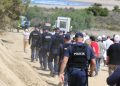
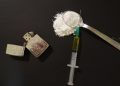
Bajzë, Malësia e Madhe, Bulqizë, Grabjan, Lushnjë, Prrenjas, Patos, Dimal. If you are wondering what these diverse place names have in common, the answer is this: police operations that uncovered varying quantities of cocaine intended for distribution to end users. During April, the Albanian State Police announced 23 operations involving the arrest of individuals suspected of distributing cocaine, or cocaine and cannabis in small doses, to Albanian consumers.
Cocaine is considered the most expensive narcotic drug, with a price that rarely falls below 100 euros per gram, although dealers often allow buyers to purchase smaller quantities. But even when a dose contains just 0.2 grams of cocaine, the price demanded still amounts to roughly what many people earn from a full day of hard labor.
This starkly suggests that while, according to World Bank statistics, nearly one in four Albanians live on less than 700 lekë a day, an unknown number enjoy enough prosperity to consume cocaine. These consumers, once largely confined to Tirana’s former Bloc district or expensive tourist destinations such as Dhërmi, now appear to have spread across many other towns and even rural areas.
Cocaine is widely regarded as the most expensive narcotic drug, with prices rarely dropping below 100 euros per gram, although dealers often sell smaller quantities to buyers. Yet even a dose containing just 0.2 grams can cost roughly the equivalent of a day’s hard wages for many Albanians.
The trend suggests a stark contrast in living standards. While World Bank data show that nearly one in four Albanians survive on less than 700 lekë a day, an unknown number appear affluent enough to afford cocaine use. Once largely associated with Tirana’s former Bloc district and upscale tourist hotspots such as Dhërmi, cocaine consumption now appears to have spread to smaller towns and even rural areas across the country.
Gjithsej për periudhën mars-prill pati 30 informacione policore të rasteve të trafikut të kokainës më vete ose të kokainës dhe cannabisit bashkë, nga të cilat, gjashtë ishin raste të zbuluara në Tiranë dhe 24 të tjerat, në rrethe.
In total, the quantities reported by police during the March-April period point to more than 3.6 kilograms of cocaine seized nationwide in cases where a specific amount was disclosed. In 18 other police statements, the confiscated quantity was described only as “a few doses,” “a small amount,” or “hundreds of doses,” without specifying the exact weight.
Such quantities of cocaine were seized on March 26 in a bar in the mining town of Bulqizë, while on April 14 police detained two suspected drug dealers in the village of Grabjan, near Lushnjë. On April 19, a Swedish citizen suspected of drug distribution was arrested in the former industrial town of Patos. Then, on May 6, police seized cocaine in Bajzë, a small northern Albanian town once known as a railway station hub.
Foreign sex workers
Alongside operations targeting cocaine trafficking, another dominant theme in State Police announcements over the past two months has been prostitution-related raids. In 13 separate operations, police identified 30 women suspected of the criminal offense of engaging in prostitution.
Only one of the suspects was Albanian, while the remaining 29 cases reflected a wide range of nationalities. The women suspected of prostitution had come to Albania from Vietnam, China, Colombia, Brazil, Ukraine and Romania.
As with the cocaine cases, incidents involving what police describe as luxury prostitution — where services reportedly cost around 250 euros, more than the country’s average monthly pension — were uncovered in unexpected locations across the country.
Alongside Tirana and Durrës, Elbasan — an industrial town long associated with crime and poverty — has also emerged as an attractive market for the world’s oldest profession. On April 30, a police operation arrested four foreign women at a venue that allegedly offered not only sexual services, but also cocaine and marijuana on demand.
Similarly, on March 10, police in Fier detained two Romanian women suspected of providing such services in the city.
Over recent years, Albania has become known as the country of origin for numerous organized crime groups involved in the large-scale trafficking of cocaine from Latin America to Europe, as well as in the retail distribution of the drug across several European countries.
Recent developments now suggest that Albania is increasingly becoming not only a destination for the financial proceeds generated by the international drug trade, but also a growing consumer market for cocaine itself.